
Preventive maintenance keeps a shrink-wrapping machine reliable, consistent and productive. The objective is simple: identify wear, contamination or adjustment issues before they cause poor packaging or unplanned downtime.
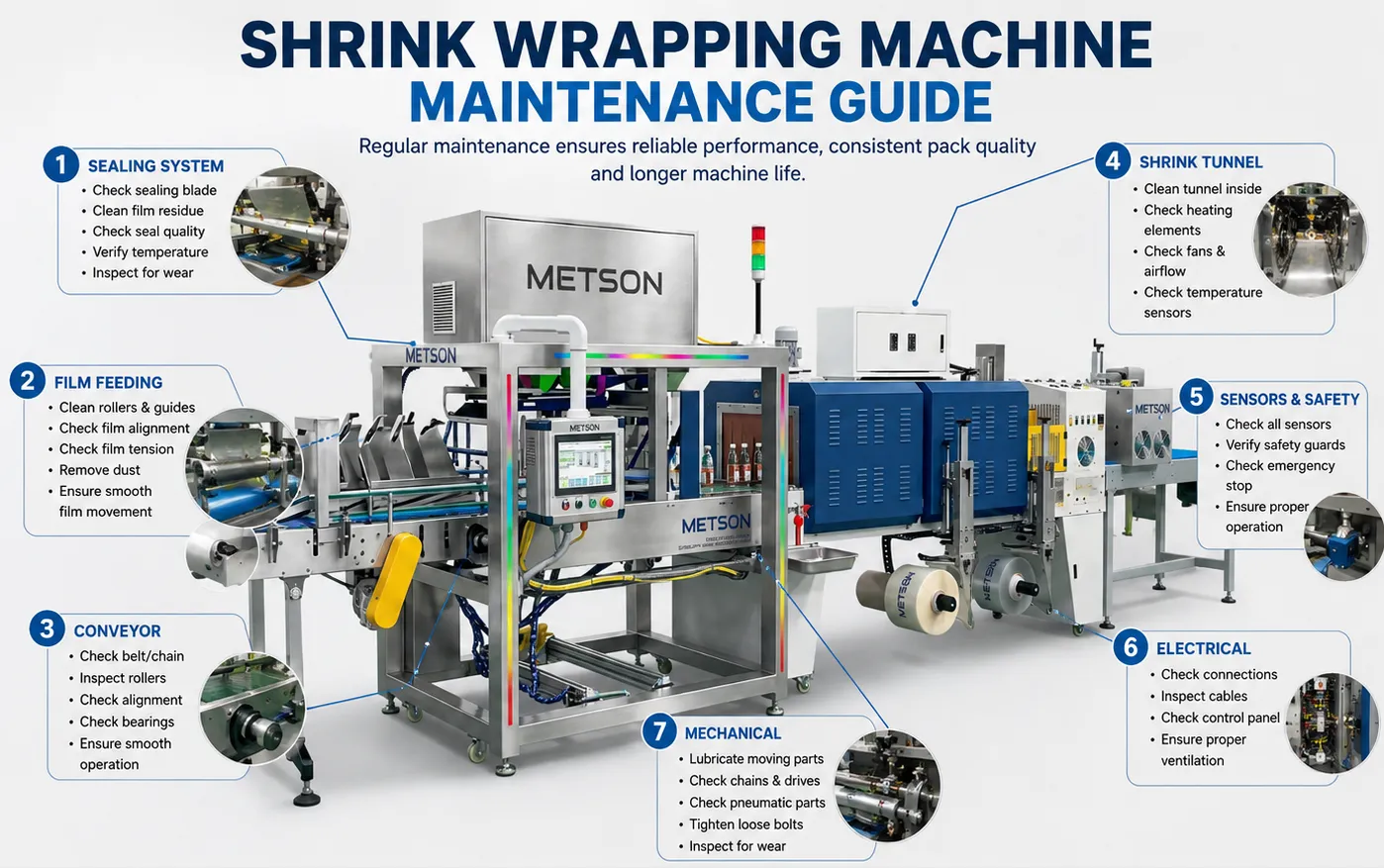
Daily Maintenance
Before or after production, check the components that directly affect machine performance:
- Sealing and cutting area
- Film rollers and guides
- Conveyor
- Product guides
- Sensors
- Shrink tunnel
- Machine working area
Remove film residue, dust and product debris, particularly around the sealing system and film path.
1. Inspect the Sealing System
The sealing system has a direct impact on package quality.
Check for:
- Uneven or incomplete seals
- Film sticking to the sealing element
- Film residue
- Damaged sealing components
- Incorrect temperature or pressure
If seals are becoming inconsistent, investigate the sealing system before continuing production at full speed.
2. Check Film Feeding
The film should move smoothly through the machine without excessive tension or misalignment.
Inspect:
- Film rollers
- Film guides
- Film tension
- Film alignment
- Cutting mechanism
Poor film feeding can cause wrinkles, tearing, incorrect wrapping and increased film consumption.
3. Inspect the Conveyor
Check that the conveyor runs smoothly and maintains consistent product movement.
Look for:
- Belt or chain wear
- Misalignment
- Loose components
- Unusual vibration
- Bearing or drive problems
This becomes increasingly important at higher production speeds.
4. Maintain the Shrink Tunnel
Clean the tunnel regularly and inspect:
- Heating elements
- Fans
- Temperature sensors
- Conveyor
- Airflow passages
- Tunnel insulation
Uneven temperature or restricted airflow can result in poor or inconsistent shrinkage.
5. Check Sensors & Safety Devices
For automatic machines, sensors should be checked regularly for correct operation.
Also verify:
- Emergency stops
- Safety guards
- Interlocks
- Product detection
- Film detection
- Temperature sensors
Safety systems should never be bypassed to maintain production.
6. Inspect Mechanical Components
According to the machine’s maintenance schedule, inspect:
- Bearings
- Chains
- Drive components
- Moving mechanisms
- Fasteners
- Pneumatic components
Lubricate only components specified by the manufacturer and use the recommended lubricant.
7. Check Electrical Components
Electrical inspection should be carried out by qualified personnel.
Check for:
- Loose connections
- Damaged cables
- Fault indications
- Overheating
- Control-panel ventilation
- Cooling fans
Keep the electrical cabinet clean and properly ventilated.
8. Monitor Wear Parts
Some components require periodic replacement depending on production hours and operating conditions.
Typical wear parts can include:
- Sealing elements
- Cutting blades
- Belts
- Bearings
- Rollers
- Heating elements
Replacing these components during planned maintenance is preferable to waiting for a failure during production.
Maintenance Schedule
| Frequency | Key Checks |
|---|---|
| Daily | Cleaning, sealing area, film path, conveyor |
| Weekly | Sensors, guides, mechanical components |
| Monthly | Drive system, tunnel components, electrical inspection |
| Periodically | Wear parts, detailed mechanical inspection |
| As specified by manufacturer | Servicing, calibration and component replacement |
The actual interval should be based on the machine design, operating hours and manufacturer’s recommendations.
Warning Signs You Shouldn’t Ignore
Schedule an inspection if you notice:
- Frequent film tearing
- Poor sealing
- Uneven shrinkage
- Increasing film consumption
- Unusual noise or vibration
- Conveyor instability
- Temperature fluctuations
- Repeated sensor faults
- Increasing downtime
Early investigation can prevent a minor component problem from becoming a major production stoppage.
What Should Buyers Ask Before Purchasing?
Maintenance should be considered when selecting the machine, not after installation.
Ask the manufacturer:
- Which parts require routine maintenance?
- What are the recommended service intervals?
- Which components are wear parts?
- How easy are they to replace?
- Are spare parts readily available?
- What service support is provided?
- Is operator maintenance training included?
Ease of maintenance can have a significant impact on the machine’s long-term operating cost and availability.
Final Takeaway
Preventive maintenance is not just about cleaning the machine. It is about keeping the sealing, film feeding, conveyor, heating, sensing and drive systems within their required operating condition.
A well-maintained shrink-wrapping machine delivers more consistent packaging, fewer interruptions and longer component life.
If you are evaluating a shrink-wrapping machine, ask us about its maintenance schedule, wear parts, spare-parts availability and service requirements before making your purchase.