
If you are purchasing a heat shrink tunnel, the most important question is not simply “What is a shrink tunnel?”
You need to know whether the tunnel can handle your product size, film, production speed and required shrink quality without becoming a bottleneck in your packaging line.
Here are the key points to check before purchasing.
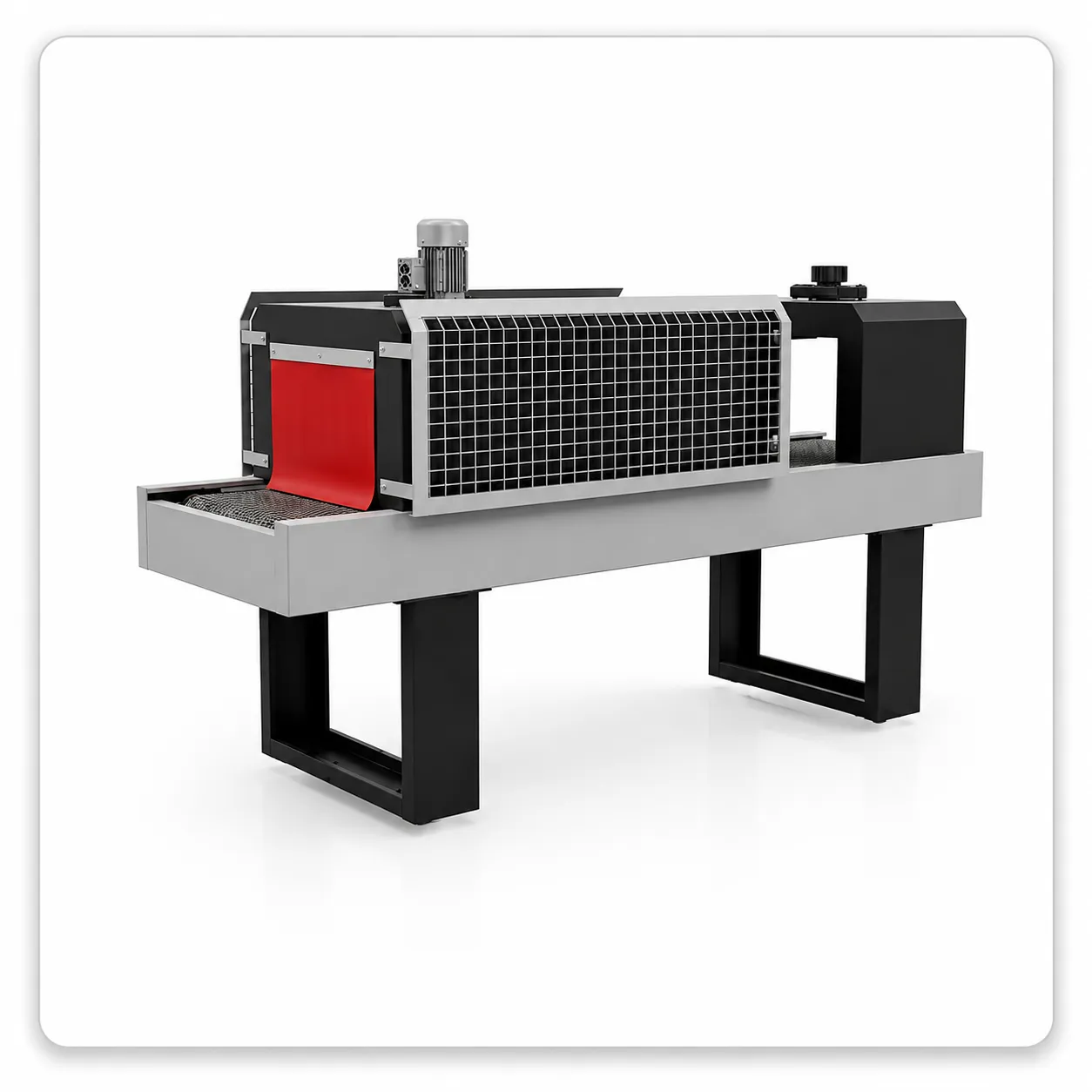
1. Start With Your Product Size
The tunnel should be selected according to the largest product or bundle you intend to run.
Provide:
- Product length
- Product width
- Product height
- Product/bundle weight
These dimensions determine the required tunnel opening and conveyor width.
Do not select a tunnel based on your smallest product if you will later run larger packs.
2. Check the Tunnel Opening
The tunnel opening must provide sufficient clearance around the wrapped product.
If the opening is too small, the product cannot pass reliably. If it is unnecessarily large, you may be paying for excess tunnel capacity and heating volume.
The right tunnel size should provide enough clearance for your largest package while maintaining effective heat circulation.
3. Match the Tunnel to Your Production Speed
Your tunnel must keep up with the shrink-wrapping machine.
If your wrapping machine can produce 120 packs per minute but the tunnel can only process 80 packs per minute, the tunnel becomes the production bottleneck.
Before buying, confirm the expected continuous throughput with your actual product.
For high-speed applications, evaluate the complete system:
Wrapping → Sealing → Shrink Tunnel → Cooling/Discharge
The entire line should support your required output.
4. Film Type Is Critical
Different shrink films require different heating characteristics.
The tunnel should be selected according to the film you use, such as:
- PE
- POF
- PVC
- Other application-specific shrink films
Tell the manufacturer your film type and thickness before the tunnel is designed.
If you have not finalized your film, this should be discussed before purchasing the tunnel because film selection affects temperature, airflow and shrinking performance.
5. Heating Capacity
A good shrink tunnel needs sufficient heating capacity to shrink the film consistently at your required production speed.
Ask the manufacturer:
- What is the heating capacity?
- What temperature range is available?
- How quickly does the tunnel reach operating temperature?
- Can temperature be controlled independently?
- How is heat distributed inside the tunnel?
The objective is not simply maximum temperature. Controlled and uniform heat is what produces consistent shrink quality.
6. Airflow Matters
Heating alone does not guarantee good shrinking.
Air circulation inside the tunnel affects how evenly heat reaches the film.
Proper airflow can help achieve:
- Uniform shrinking
- Better package appearance
- Fewer loose film areas
- More consistent results across different product shapes
This becomes particularly important for irregular products, large bundles and high-speed production.
7. Conveyor Selection
The conveyor needs to support the product throughout the shrinking process.
Check:
- Conveyor width
- Conveyor length
- Load capacity
- Conveyor speed
- Product stability
- Material suitable for tunnel temperature
For heavier industrial products, conveyor load capacity becomes especially important.
8. Tunnel Length
Tunnel length affects how much time the package is exposed to controlled heat.
The required length depends on:
Film + product + package size + production speed + required shrink quality
A larger or heavier package may require different tunnel conditions from a small carton.
Therefore, tunnel length should be determined from the actual application rather than choosing a standard length without testing.
9. Energy Consumption
Energy is an ongoing operating cost, so don’t compare tunnels only on purchase price.
Ask about:
- Heating power
- Insulation
- Temperature control
- Standby operation
- Heat recovery, where applicable
- Expected energy consumption
A well-insulated tunnel with effective temperature control can reduce unnecessary heat loss.
10. Can the Tunnel Handle Your Product Range?
If you have multiple products, check the tunnel against the minimum and maximum package dimensions.
You should also consider whether different products require different:
- Conveyor speeds
- Temperatures
- Airflow
- Shrink times
If frequent product changes are expected, easy adjustment and control become important.
11. Integration With Your Shrink-Wrapping Machine
A heat shrink tunnel is normally part of a larger packaging system.
Before purchasing, confirm that it can be properly integrated with your:
- Shrink-wrapping machine
- Infeed conveyor
- Outfeed conveyor
- Product grouping system
- Existing production line
The conveyor height, speed and product transfer should all be compatible.
12. What Should You Test Before Buying?
This is one of the most important steps.
Ask the manufacturer to test:
Your product + your film + your required production speed
Check the finished package for:
- Uniform shrinkage
- Film tightness
- Wrinkles
- Burn marks
- Seal integrity
- Package appearance
- Product stability
- Continuous throughput
A tunnel that performs well with one product may not produce the same result with another.
13. What Should You Ask the Manufacturer?
Before requesting a quotation, get clear answers to:
- What is the maximum product size?
- What is the tunnel opening?
- What conveyor width is required?
- What film types can be used?
- What is the heating capacity?
- What production speed can it handle?
- What is the tunnel length?
- What is the electrical requirement?
- What is the machine footprint?
- How is temperature controlled?
- How is airflow controlled?
- What maintenance is required?
- Can it integrate with my existing shrink wrapper?
What Information Should You Send for a Quote?
For an accurate heat shrink tunnel recommendation, send:
Product/bundle size: Length × Width × Height
Weight: Product or bundle weight
Film: Type and thickness
Required output: Packs per minute
Product range: Minimum and maximum sizes
Existing machine: Shrink wrapper/conveyor details, if available
Available space: Installation area, if restricted
With these details, the tunnel can be sized according to your actual packaging requirement.
Final Buyer Checklist
Before purchasing, make sure you have confirmed:
- Tunnel opening matches your largest package
- Conveyor can handle your product weight
- Heating capacity matches your film and speed
- Airflow provides uniform shrinking
- Tunnel length provides sufficient shrink time
- Energy consumption is acceptable
- Controls allow the required adjustments
- Machine speed matches your shrink wrapper
- Integration works with your existing line
- Actual product testing has been completed
Ready to Select Your Heat Shrink Tunnel?
Don’t choose a heat shrink tunnel simply by tunnel size or heating power.
The right tunnel is the one that can continuously shrink your actual film and product at your required production speed with consistent quality and reasonable operating cost.
Send us your product dimensions, film specification and required packs per minute, and we can recommend the appropriate heat shrink tunnel configuration for your packaging line.