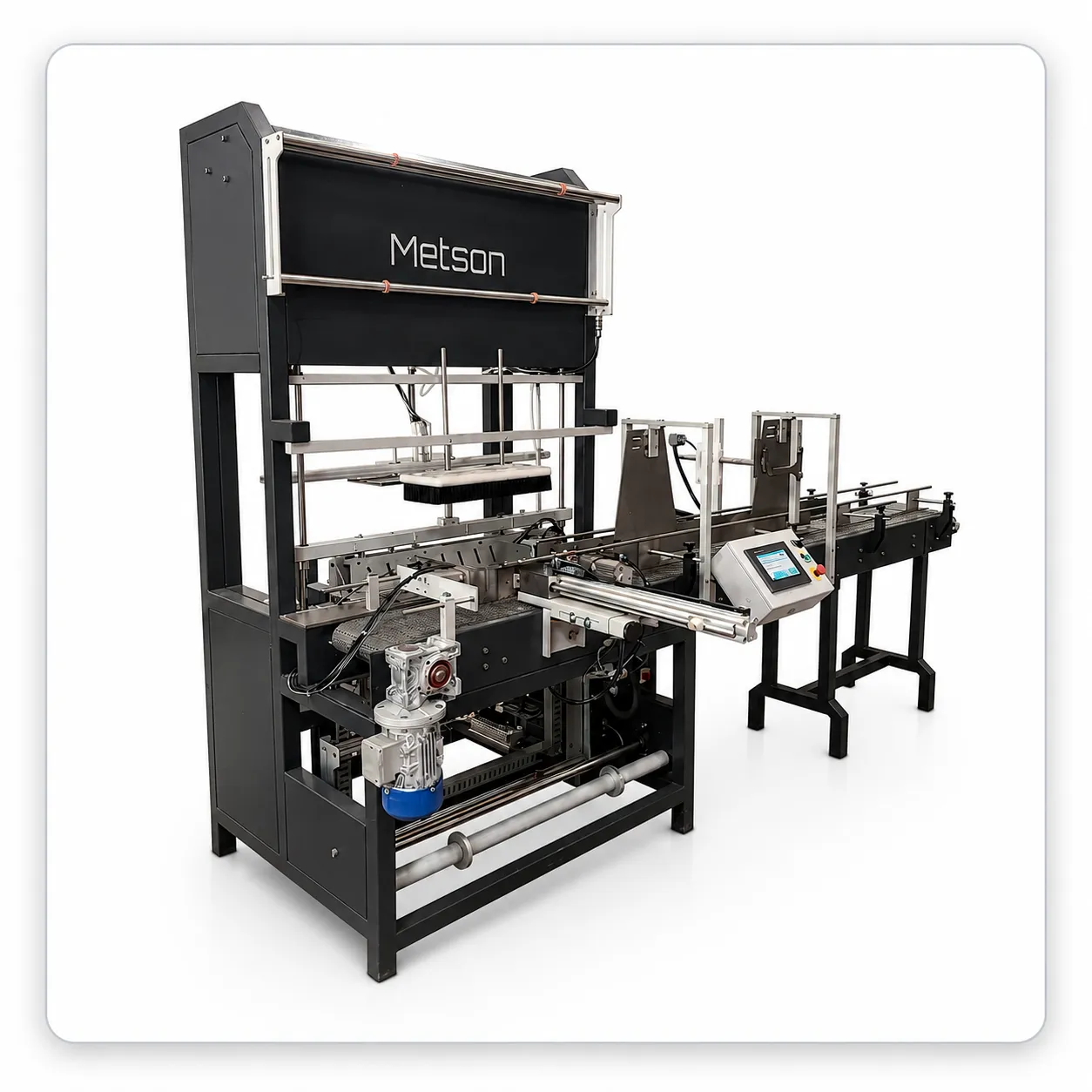
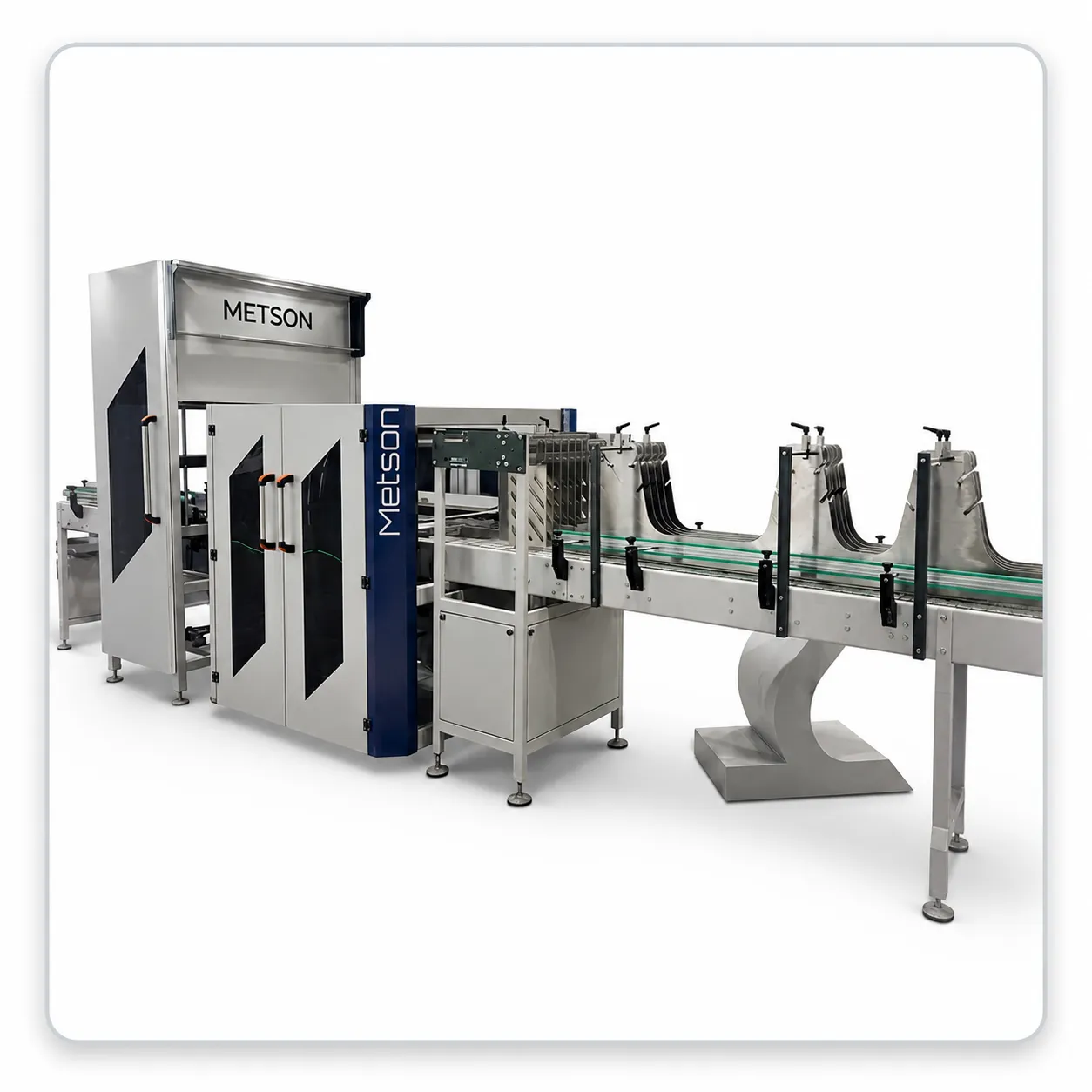
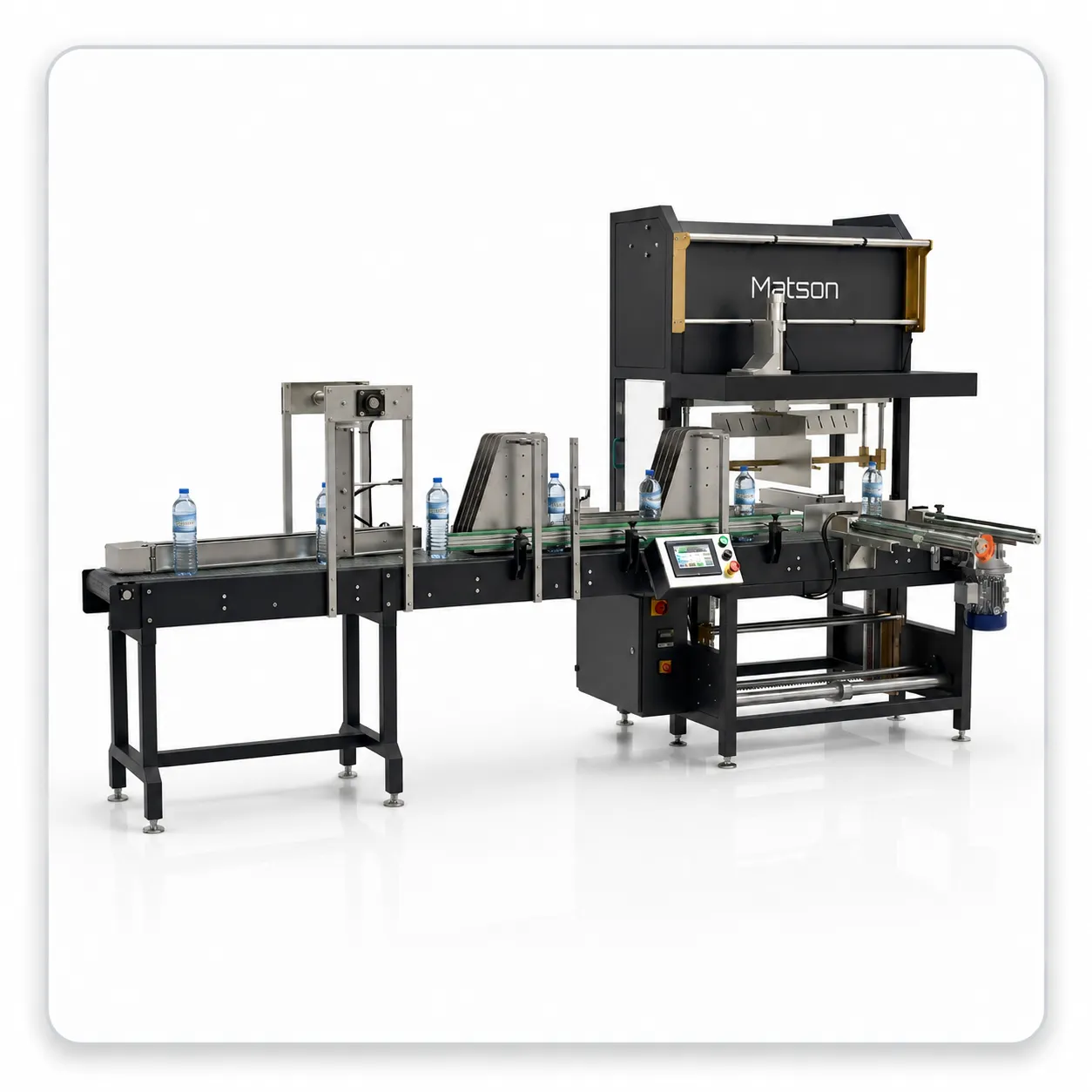
A shrink wrapping machine performs best when it is integrated into the packaging line rather than operated as a standalone machine. Line integration ensures a continuous product flow, synchronized machine operation, and consistent package quality while minimizing manual intervention and unplanned downtime.
At Metson Machines, every shrink wrapping system is engineered around the customer’s production process, available floor space, product characteristics, and throughput requirements. The objective is to build a packaging line where each machine communicates, responds, and operates as a single system.
This guide explains the engineering considerations involved in integrating a shrink wrapping machine into an automated packaging line.
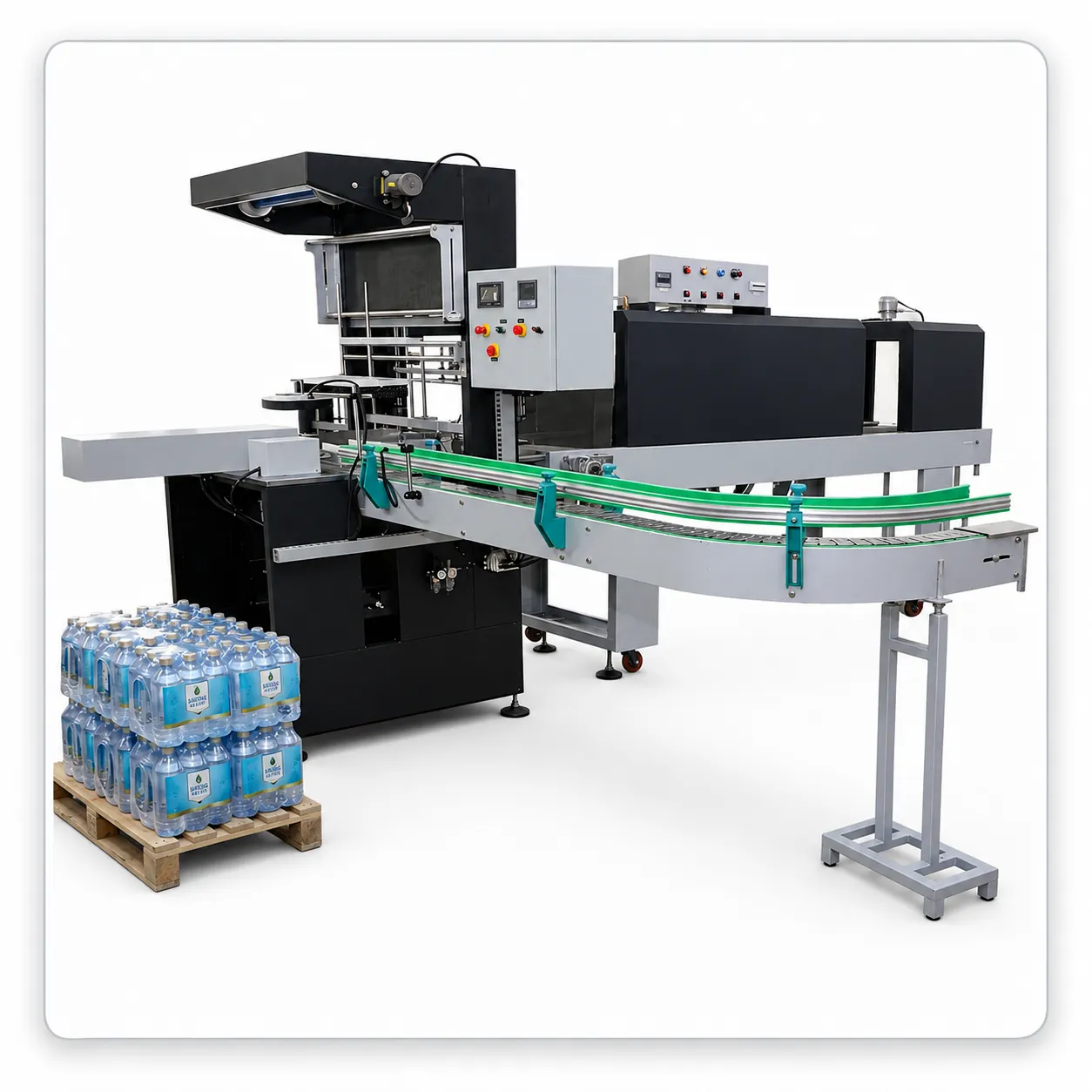
Understanding the Packaging Line
Integration begins with understanding the complete production flow. The shrink wrapping machine is only one section of the line and must operate in coordination with upstream and downstream equipment.
Typical upstream equipment may include filling, capping, labeling, inspection, or cartoning systems. Downstream equipment may include cooling conveyors, case packers, palletizers, or warehouse conveyors.
The performance of the shrink wrapper depends on the stability and consistency of product flow from these connected systems.
Production Study
Every integration project starts with collecting production data.
The following parameters determine the system design:
- Product dimensions and weight
- Product stability during conveying
- Packaging configuration
- Line speed
- Product orientation
- Changeover frequency
- Available installation space
- Utility availability
Machine selection is based on actual production requirements rather than theoretical capacity.
Equipment Selection
Selecting the correct shrink wrapping machine depends on the product and production objectives.
Important considerations include:
- Product dimensions
- Film type
- Required output
- Pack format
- Future expansion
- Automation level
The machine should maintain production speed without creating a bottleneck elsewhere in the line.
Conveyor Integration
Conveyors connect every section of the packaging line. Their design directly affects product stability and production efficiency.
Proper conveyor integration includes:
- Speed synchronization
- Controlled product spacing
- Smooth product transfer
- Stable product guidance
- Minimal transfer gaps
- Reliable accumulation
Poor conveyor design is one of the most common causes of product jams and inconsistent packaging.
Product Handling
Products must enter the shrink wrapper in a controlled and repeatable manner.
The handling system should maintain:
- Correct orientation
- Uniform spacing
- Stable movement
- Continuous flow
Different products require different handling methods based on their shape, weight, and center of gravity.
Shrink Film Selection
Film selection influences package appearance, sealing quality, and operating cost.
The selected film should provide:
- Adequate strength
- Consistent shrink characteristics
- Good seal integrity
- Compatibility with the product
- Reliable machine performance
Film specifications should always match the application rather than being selected solely on cost.
Electrical Integration
A packaging line functions as one control system rather than individual machines.
The electrical system coordinates:
- Conveyor drives
- Shrink wrapper
- Shrink tunnel
- Sensors
- Safety devices
- Operator interface
Machine communication enables automatic speed matching, fault handling, and production monitoring.
Automation
Automation improves consistency and reduces operator dependency.
Typical automation functions include:
- Automatic product detection
- Conveyor synchronization
- Film feed control
- Fault diagnostics
- Recipe management
- Production counting
- Alarm reporting
The level of automation is selected according to production requirements.
Safety
Safety is integrated into the machine design from the beginning.
A complete system includes:
- Emergency stop circuits
- Safety guarding
- Access door interlocks
- Operator protection
- Electrical safety
- Safe maintenance access
Safety systems must remain effective without reducing machine accessibility or production efficiency.
Utilities
Reliable operation depends on stable utilities.
Typical requirements include:
- Electrical power
- Compressed air
- Ventilation for the shrink tunnel
- Adequate installation space
Utility planning should be completed before installation to avoid commissioning delays.
Installation
Installation involves mechanical, electrical, pneumatic, and control system integration.
Typical activities include:
- Machine positioning
- Conveyor alignment
- Electrical connections
- Pneumatic connections
- Network communication
- Utility verification
- Initial machine testing
Correct installation establishes the foundation for reliable operation.
Commissioning
Commissioning confirms that every section of the packaging line operates together under production conditions.
This includes:
- Machine calibration
- Sensor adjustment
- Conveyor synchronization
- Temperature optimization
- Seal verification
- Safety testing
- Production trials
The line should demonstrate stable operation before production handover.
Performance Optimization
After commissioning, operating parameters are adjusted to improve performance.
Optimization focuses on:
- Throughput
- Package quality
- Film consumption
- Energy usage
- Downtime reduction
- Changeover time
Performance improvements are based on production data rather than assumptions.
Maintenance
Routine maintenance preserves machine reliability and reduces unexpected stoppages.
Maintenance activities include:
- Cleaning sensors
- Inspecting conveyors
- Checking sealing components
- Verifying electrical connections
- Monitoring pneumatic systems
- Replacing wear parts before failure
Preventive maintenance increases equipment life and improves production availability.
Why Choose Metson Machines
Metson Machines delivers complete packaging line integration solutions designed around customer requirements rather than standard machine layouts.
Our scope includes:
- Packaging line engineering
- Machine selection
- Conveyor system design
- Automation integration
- Electrical and control systems
- Installation and commissioning
- Operator training
- After-sales technical support
Every project is engineered to achieve reliable operation, consistent packaging quality, and long-term production performance.
Partner with Metson Machines
Every packaging line has unique production requirements. The right shrink wrapping solution depends on your product, production speed, available space, and automation goals.
Whether you’re planning a new packaging line, upgrading existing equipment, or integrating a shrink wrapping machine into your current process, our engineering team can help you identify the most efficient solution.
Get in touch with Metson Machines for a technical consultation or request a customized quotation. We’ll evaluate your application, recommend the right system configuration, and deliver a solution engineered for reliable, long-term performance.